A Night of Culture: Best Theatres and Performances for Nightlife in Dubai
Dubai’s nightlife isn’t just about rooftop bars and clubbing. By night, the city transforms into a stage-where traditional Arabic storytelling meets avant-garde theatre, and world-class orchestras echo through glass-walled auditoriums. If you’re looking for something deeper than neon lights and bass drops, Dubai’s cultural night scene delivers. You don’t need to leave the city to experience global artistry. You just need to know where to look.
The Dubai Opera: Where Global Meets Local
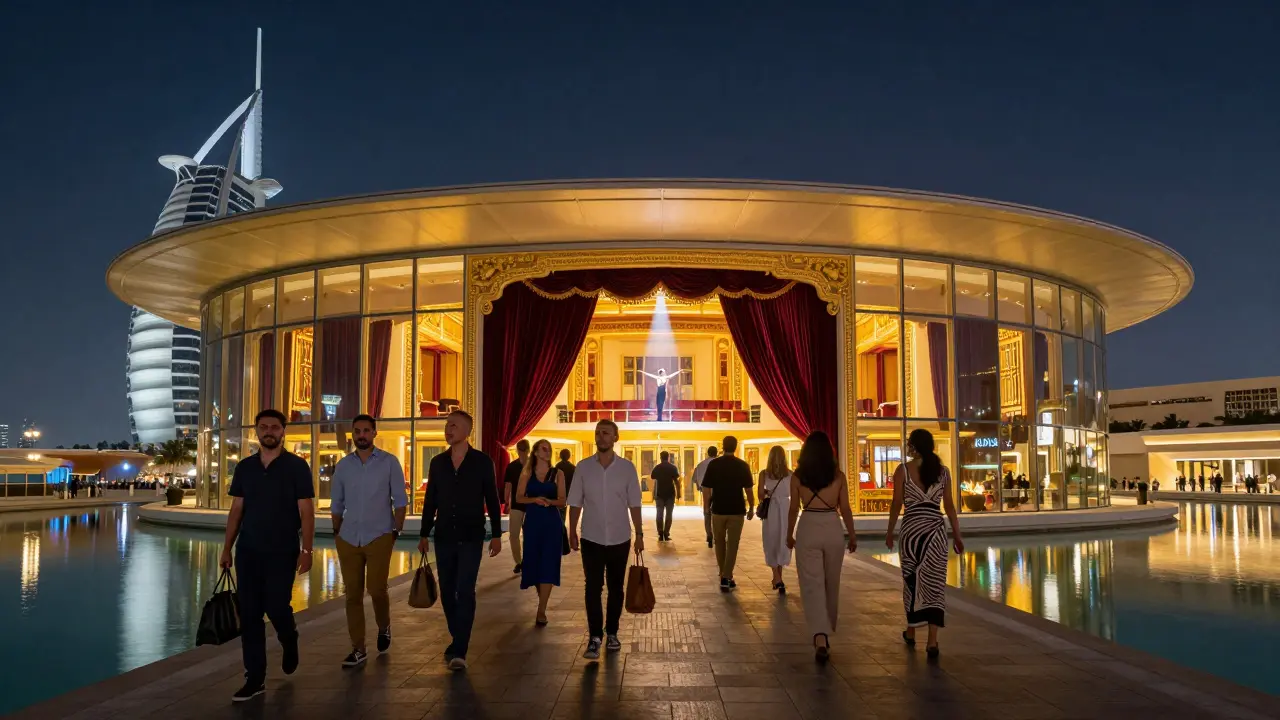
The Dubai Opera, shaped like a dhow sail and nestled in Downtown Dubai, isn’t just a building-it’s a cultural engine. Every night, it hosts something different: a ballet from Moscow, a Shakespeare play in English, or a traditional Oud concert with live dervishes. The seating is intimate, the acoustics are engineered for perfection, and the crowd? A mix of expats, tourists, and locals who treat the arts like a weekly ritual.
Don’t miss the monthly Dubai Opera Nights, where ticket prices drop to under 150 AED for select performances. These aren’t discounted shows-they’re curated experiences designed to make high culture accessible. One night, you might see a flamenco dancer from Seville; the next, a Emirati poet performing with live percussion. The programming changes fast, so check their website every Thursday for the weekend lineup.
Alserkal Avenue: Underground Art That Comes Alive After Dark
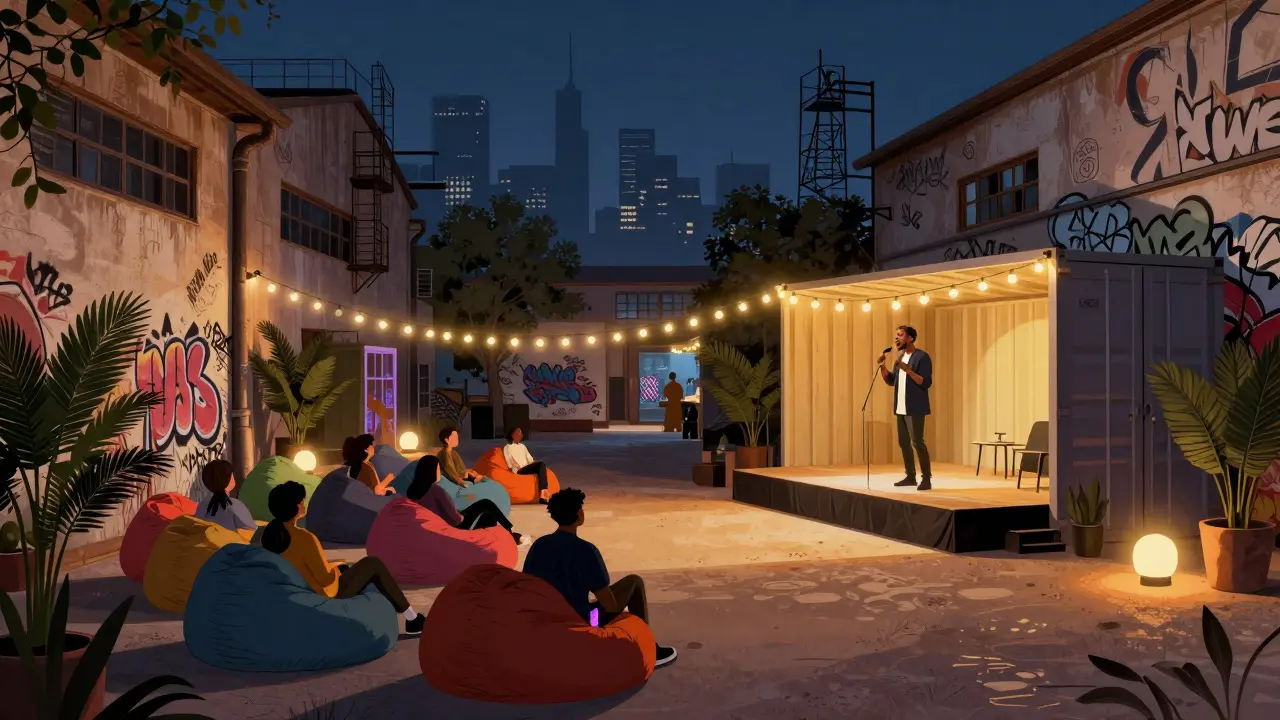
Forget the glitter of the Mall of the Emirates. For raw, unfiltered creativity, head to Alserkal Avenue in Al Quoz. This industrial complex turns into a cultural hub after sunset. Galleries stay open late, pop-up theatres set up in shipping containers, and experimental performance art spills onto the streets.
On Fridays, Platform 1 hosts Midnight Monologues-a series where local actors perform original scripts inspired by Dubai’s migrant workers, expat struggles, and desert myths. The audience sits on bean bags, drinks Emirati coffee, and watches stories unfold in dim light. No tickets. No dress code. Just authenticity.
Some nights, you’ll stumble into a 30-minute immersive theatre piece where you walk through a recreated 1960s Dubai souk, guided by actors who never break character. It’s not tourism. It’s memory-making.
Theatre of the Senses: Arabian Nights Reimagined
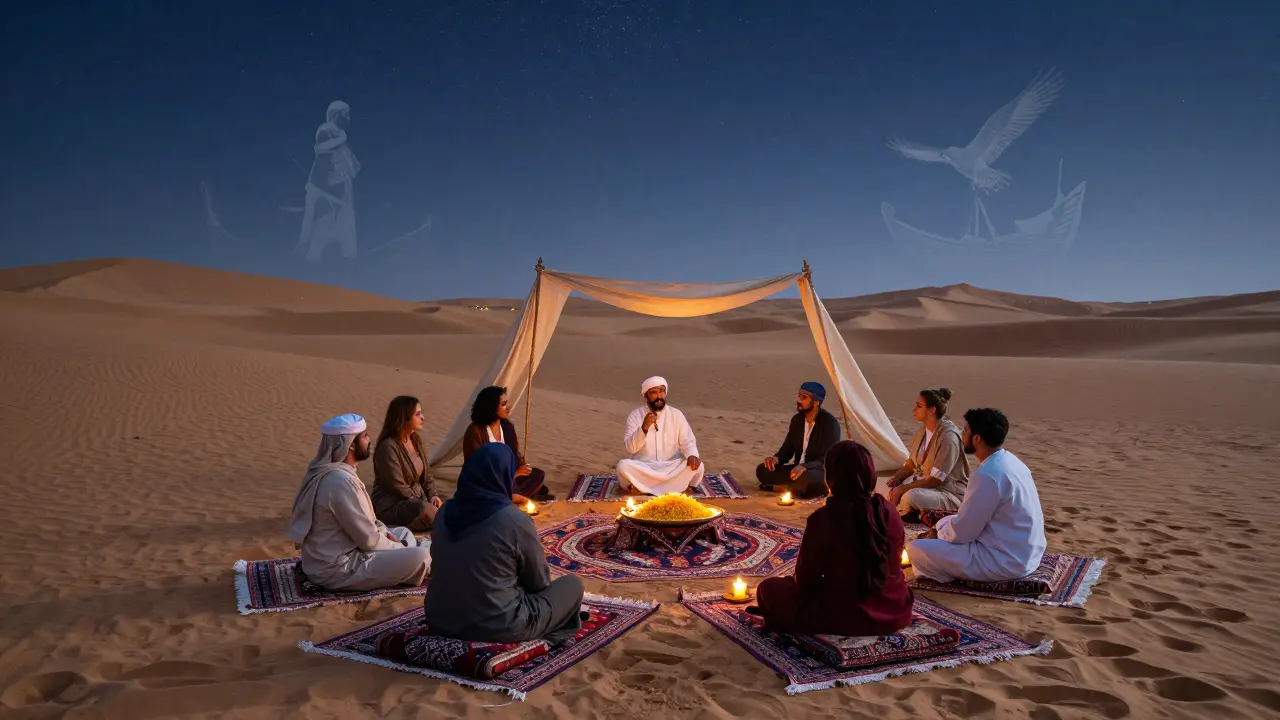
At Al Maha Desert Resort, just outside the city, a nightly show called Arabian Nights: The Experience doesn’t just tell a story-it surrounds you with it. You’re seated on Persian rugs under a sky full of stars, while live musicians play the rebab and darbuka. A storyteller weaves tales of Sindbad and Scheherazade, but this isn’t a kids’ show. The language is poetic, the lighting is moody, and the food? Slow-cooked lamb with saffron rice served by candlelight.
It’s not loud. It’s not flashy. But it’s unforgettable. Guests leave quietly, not because they’re bored-but because they’re moved. This show runs every Friday and Saturday night, and you need to book at least a week ahead. It’s not cheap (around 800 AED per person), but it’s the only place in Dubai where the desert itself becomes part of the performance.
Al Fardan Theatre: Hidden Gem for Arabic Drama
Most tourists never find Al Fardan Theatre. It’s tucked into a quiet corner of Jumeirah, above a bookshop that opens at 10 a.m. and closes at 8 p.m. But after 9 p.m., the lights go down, the curtains rise, and the best Arabic-language theatre in the Gulf begins.
Here, you’ll see modern adaptations of classic Arabic plays-like The Government Inspector set in a Dubai government office, or Antigone reimagined as a woman fighting to bury her brother in a city that bans public mourning. The actors are all Emirati or from the Levant. Their delivery is subtle, their pauses heavy with meaning. The audience? Mostly locals, with a few curious expats who’ve heard the whispers.
There’s no English translation. But you don’t need it. The emotion is clear. The tension is real. And after the show, the cast often joins you for tea and dates at the bookshop next door.
Performances That Only Happen Once
Dubai’s cultural calendar is full of one-night-only events. You’ll hear about them from hotel concierges, art students, or Instagram accounts like @dubaiculturediary.
Last month, a group of Iranian dancers performed a silent, hour-long piece in the Dubai Museum courtyard-no music, just the sound of sand shifting under their bare feet. The month before, a blind poet from Oman recited verses about the sea while a live painter created a mural behind him, matching each word with a stroke.
These aren’t advertised on tourist apps. They’re shared by word of mouth. If you want to catch them, join local art groups on Facebook, follow @dubaipostmodern on Instagram, or ask your hotel to connect you with their cultural liaison. They know who’s performing tonight.
What to Wear, When to Go, and How to Get There
Dubai’s cultural venues don’t require formal dress-but they do expect respect. No flip-flops. No tank tops. Light layers work best: the air-conditioning inside is freezing, but the walk from your car to the entrance might be warm.
Start your night early. Most shows begin at 8:30 p.m. or 9 p.m. and last 90 minutes. Leave time to walk around before. Many venues have small art markets or poetry readings starting at 7 p.m. That’s when the real energy builds.
For transport, use Careem or Uber. Public transport doesn’t run late enough. And don’t try to drive yourself-you’ll end up circling the same block for 20 minutes looking for parking. The best spots are near Dubai Opera, Alserkal, and Jumeirah. Park nearby and walk. It’s part of the experience.
Why This Matters More Than a Nightclub
Dubai doesn’t just want to be a city of luxury. It’s trying to become a city of meaning. And the best proof? The crowds at these shows. You’ll see Emirati grandmothers in abayas sitting next to young artists in streetwear. You’ll hear French, Urdu, Tagalog, and Arabic all spoken in the same lobby. This isn’t just entertainment. It’s connection.
When you leave a theatre here, you don’t just remember the lights or the music. You remember the silence between the lines. The way a single drumbeat made the whole room hold its breath. The stranger beside you who whispered, "That was my father’s story."
That’s the kind of night you don’t forget. And it’s the kind of night Dubai does better than anywhere else in the Gulf.
Are these cultural shows expensive in Dubai?
Prices vary widely. At Dubai Opera, tickets for major international acts can cost up to 1,000 AED, but many local performances start at 50 AED. Alserkal Avenue events are often free. Al Maha’s Arabian Nights costs about 800 AED per person, but includes dinner. Always check for "Residents Only" discounts-many venues offer 30-50% off for UAE citizens and residents with valid ID.
Can I attend these shows if I don’t speak Arabic?
Yes. Most major venues like Dubai Opera offer English subtitles for non-English performances. Al Fardan Theatre and some Alserkal events are in Arabic only, but the emotion and visuals carry the story. Many expats say they understand more than they expect-even without translation. For the best experience, choose shows labeled "English-friendly" or ask the box office if subtitles are available.
What’s the best night to go out for culture in Dubai?
Friday and Saturday nights are the busiest, with the most shows running. But Wednesday and Thursday are quieter and often feature experimental or emerging artists. If you want fewer crowds and more intimate performances, aim for midweek. Some venues even host "Artist Talk Nights" on Thursdays, where you can meet the creators after the show.
Is it safe to go to these places at night?
Absolutely. Dubai is one of the safest cities in the world at night. Cultural venues are well-lit, staffed, and located in secure areas. Alserkal Avenue has security patrols, Dubai Opera has valet and concierge services, and Al Maha is a private resort. Just stick to the main venues-avoid wandering into unfamiliar side streets after midnight. But the theatres themselves? Perfectly safe.
How do I find out what’s playing this week?
Start with Dubai Opera’s website-they update their calendar every Thursday for the weekend. For Alserkal, check alserkalavenue.ae and follow @dubaiculturediary on Instagram. For local theatre, join the Facebook group "Dubai Arts & Culture Network." Hotels also have printed weekly cultural guides at the front desk. Don’t rely on tourist apps-they’re outdated by the time they’re published.
If you’re looking for a night that stays with you long after the lights come up, skip the clubs. Go to the theatre. Sit in silence. Let the story find you.